Build
Dotting the i’s and crossing the t’s - Scope’s construction project managers execute the project plan and manage communication with expert precision.

The construction or build phase of a project is where we see the detailed planning come together to realise the project vision. More than managing the physical construction of a project, Scope’s project management services and technical experience ensure that the project execution runs smoothly. Communication is key. From facilitating project steering committees to managing day to day communication between clients, contractors and subcontractors, the project management team becomes well-acquainted with everyone involved in the project. We conduct regular site visits and project control group (PCG) meetings and ensure all work is up to standard with producer statements and sign offs collected as construction phases are completed. Scope’s project managers work alongside our quantity surveyors to provide drawdown approvals and reporting, regular cost forecasting and manage contract variations as they come up.
Engineer to the Contract (ETC), Contract Administrator (CA) and Independent Certifier (IC)
We’re experts in contract management with extensive technical experience across NZS3910:2013, NZS3910:2023, NZS3916:2013 and NZS3917:2013 contracts. For projects under NZS3910:2013, Scope offers Engineer to the Contract (ETC) services, with our senior project managers available to provide expert impartial advice and direction. Under the updated NZS3910:2023, this role has been split in two, and our senior professionals are available to act as Contract Administrator (CA), Independent Certifier (IC), or both, depending on what suits the project. As CA we act on your behalf, giving day-to-day instructions and working with the contractor to agree variations, valuations, and extensions of time. As IC we ensure all contractual processes are managed correctly, decisions are made fairly and impartially, and certifications are issued as the contract requires.
Service detail
Contract Management
We professionally administer the construction contract on your behalf, specialising in NZS3910:2023, NZS3916:2013, and NZS3917:2013. We act as your vigilant and impartial representative, ensuring the contractor's full compliance with all contractual obligations and holding all parties to account.
Engineer to the Contract (ETC)
Our senior professionals are qualified to act as the Engineer to the Contract (or to oversee the appointed Engineer). We ensure all contractual processes are managed correctly, decisions are made fairly and impartially, and the contract is administered as intended.
Contract Administrator (CA)
Our senior professionals are qualified to act as Contract Administrator on your behalf, keeping the project moving day to day. We issue instructions, work with the contractor to agree variations, valuations and extensions of time, and keep the paper trail clean so nothing gets lost in translation.
Independent Certifier (IC)
Our senior professionals are qualified to act as Independent Certifier, or to oversee an appointed IC. Where a fair, independent call is needed — on payments, variations, or disputed matters — we make it, backed by the technical grounding to get it right the first time.
Communication Management
We serve as your single, professional point of contact managing communication between clients, contractors, consultants, and other stakeholders. You receive clear, regular project reports, while we handle the day-to-day interactions.
Site Visits and Inspections
We conduct regular, thorough site visits to independently verify that construction progress and quality align with contract specifications. We manage the collection of all producer statements and sign-off documentation throughout the build, protecting you from future liability and ensuring a complete quality assurance record.
Financial management
Our quantity surveyors maintain strict control over project finances; independently verifying payment claims, providing detailed drawdown reports for funders, accurately forecasting final costs, and rigorously assessing variations to protect your budget.
Frequently asked questions
Our project managers oversee the delivery of works by contractors to ensure everything is built in accordance with the design and to the required standard. It’s their job to:
- Monitor progress to ensure the project is tracking on time
- Verify payment claims and assessing variations
- Facilitate project meetings and managing information flow between all parties
- Resolve technical issues in collaboration with the builder and consultants
- Manage territorial authority inspections and compliance checks
- Communicate with external parties including neighbours, communities, and funders where required
- Collect and maintaining all project records and documentation
- Carry out defect inspections and ensuring they are addressed
- Oversee health and safety on the project
- Identify and managing project risks
- Provide ongoing reporting including monthly project reports
The Engineer to the Contract (ETC) administers the construction contract in accordance with the NZS3910 Conditions of Contract. Under the updated NZS3910:2023, this role is now called the Independent Certifier (IC), but the purpose remains the same: to ensure the contract is run fairly for everyone involved.
A good ETC or IC needs to be independent of both the client’s and the contractor’s organisations. Even though the client pays for the role, the Construction Contracts Act requires them to assess payment and variation claims impartially. Think of it like a referee who is engaged by one team but still has to call the game fairly.
On smaller, lower-risk projects the ETC or IC role can sit alongside the project manager and quantity surveyor, which can offer real value. On more complex projects it works better as a standalone role. Scope always carries out ETC and IC functions independently, though we often combine them with our project management and QS services where it makes sense to do so.
It is worth noting that the ETC role is quite different from that of a Chartered Design Engineer. Some design engineers do take it on, but the skills required are genuinely different and there is an obvious conflict of interest where an engineer is assessing work they also designed.
Our Project Execution Plans (PEPs) set out a communication plan for each project, tailored to the specific needs of the client and project team. Most formal communication is managed electronically and captured on the project file through our project management software Procore ensuring a complete and accessible record at all times.
We use a range of platforms to support effective communication, including Procore, Zoom, Teams, Workflowmax, and M365.
Typically the main contractor communicates with their subcontractors, to ensure correct lines of communication and approval are maintained.
Your Project team are always available to answer any questions you may have throughout the project.
All of Scope’s project managers handle financial administration including budget commitments, forecasting, variations, and drawdowns which are all tracked through Procore, we work closely with our NZIQS-registered Project Quantity Surveyor (PQS) and can prepare cashflow forecasts and a full range of financial reports if needed.
Scope can also provide Bank Quantity Surveyor services, giving your funder certainty over the drawdown of funds.
Construction progresses quickly, and surfaces or structural elements can be concealed before issues are identified. Regular site inspections ensure contractors are delivering to the required standard before it’s too late to address any defects in materials or workmanship. Territorial authorities often require inspections and quality assurance documentation, including as-built records, as a condition of issuing a Code Compliance Certificate (CCC). Without a CCC, you may face issues with insurance, funding, and use of the building.
Under NZS3910:2023, the Engineer to the Contract role has been split in two. The Contract Administrator acts for the client, giving day-to-day instructions and working with the contractor to agree variations, valuations, and extensions of time. The Independent Certifier takes on the impartial side of the old role — certifying valuations and making fair, independent decisions. Both roles can be performed by Scope, with different people if necessary. For larger jobs splitting the role (unlike the case with an ETC) removes the more administrative aspect from the IC’s scope (allowing skilled clients to self-perform this/ or use cheaper Scope resources as CA) and focuses the IC’s role on final/high level certification and decision making, once both the CA and Contractor have first endeavoured to value the works and resolve issues. The IC becomes the ultimate decision maker in the event agreement cannot first be reached between CA and Contractor.
The Independent Certifier. Parties must ask the IC to decide on a matter of dispute, but that’s no longer a required first step and the CA and Contractor are required to try to resolve the issue first. The CA is there to run the contract on the client’s behalf, not to adjudicate — any dispute over an instruction the CA gave sits with the client, while once requested to intervene by either party the IC is required to decide on the issue. There are then further mechanisms available to both parties such as mediation or arbitration.
Not necessarily. Like the old ETC role, on smaller, lower-risk projects it can sit alongside the project manager and quantity surveyor, and combining roles can offer real value. The key is making sure it’s always clear which hat that person is wearing at any given time to ensure fair decision making and to avoid disputed escalating. On more complex projects, it works better as a standalone role.
Related project partnerships
-
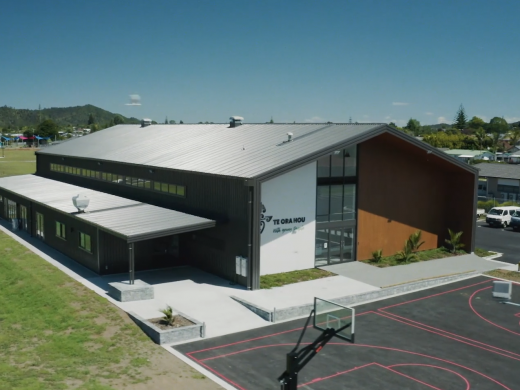
Te Ora Hou Community Facility
We knew this project was special as it would have an impact on many young people in the community.
-
Keith Andrews Trucks Mercedes Benz Dealership
Intricate details and a high-end spec to match at the new Mercedes Benz Dealership
-
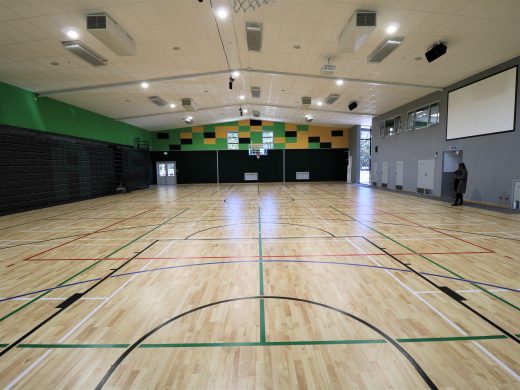
Tauraroa Area School Gymnasium Redevelopment
A decade in the making, the facility that will serve the school community for many generations to come.

Related people
-
Ben Tomason
DirectorAn award-winning Senior Project Manager, Ben is known for his big-picture thinking.
-
Bruce Tizard
Senior Project ManagerBruce has worked within central and local Government environments and now in the private sector with the Team at Scope.
-
Kelly Haora
DirectorKelly has a broad experience base of small and large-scale projects across multiple disciplines.
-
Dylan Menzies
Senior Project ManagerHighly experienced Senior Project Manager, with a wealth of experience in commercial developments. With an engineering background Dylan brings...
-
Tohi Henry
Project ManagerTohi brings unique on-the-ground design and construction industry experience to our team.